Design is often experienced as a finished object. Less visible are the conversations and decisions that shape it along the way. That idea formed the foundation of Mazda Craft Journeys x WDC activity, held during Open – Design Week Frankfurt RheinMain, the flagship festival of World Design Capital 2026 (WDC 2026).
World Design Capital is an initiative of World Design Organization that honours cities using design as a driver of economic, social, cultural and environmental progress. In 2026, the title belongs to Frankfurt RheinMain under the theme “Design for Democracy. Atmospheres for a better life.”
Across ten days, Open – Design Week brought together exhibitions, talks, workshops and tours across more than 150 venues, exploring how design shapes everyday life, culture, architecture and urban space.
Mazda participated as official Mobility Partner of WDC 2026, reflecting a perspective that extends beyond the vehicle itself: mobility as a design discipline that intersects with architecture, material culture, craftsmanship and everyday life.
For Mazda, this way of thinking is closely connected to Kodo—Soul of Motion. Introduced in 2010, it is not simply a design language, but a philosophy shaped by movement, craftsmanship and human perception. Mazda Craft Journeys x WDC activity was an invitation to experience that philosophy as a living process.
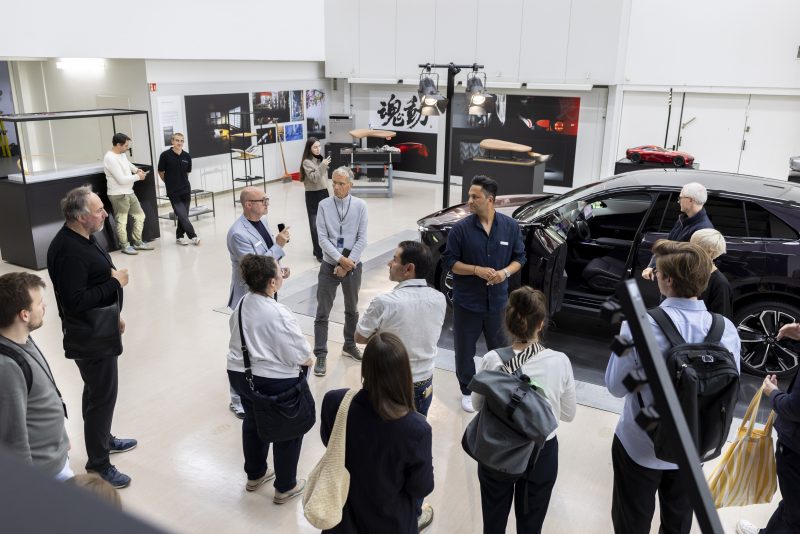
At Mazda’s European Design Centre in Oberursel, Germany—home to Mazda Research Europe, one of the brand’s three global R&D hubs—a working studio opened its doors to reveal how Mazda design evolves from first ideas into physical form.
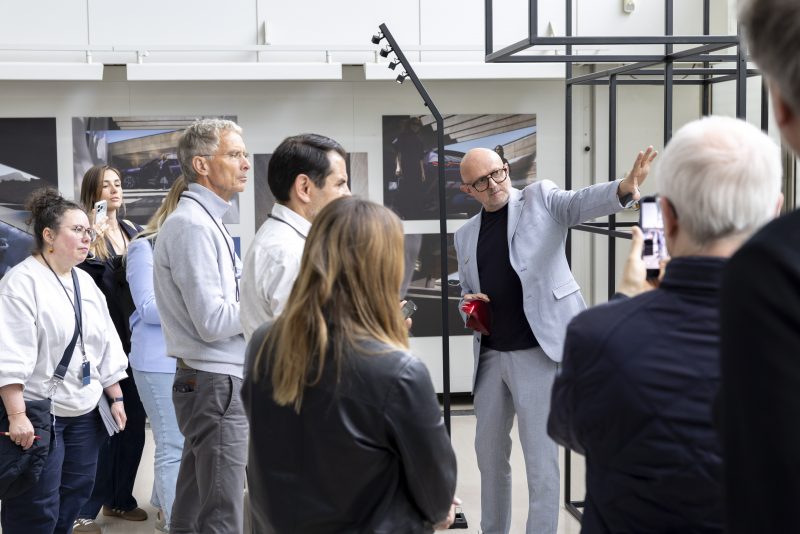
The experience began with an introduction from Jo Stenuit, Director Mazda Design Europe, who shared the principles that shape Mazda’s approach to design. Conversations moved from Kodo and Takumi, Mazda’s philosophy of master craftsmanship, to the role of materials, light and human-centred thinking.
The question then becomes how these principles take shape in practice. At Mazda’s European Design Centre, one vehicle offered a clear answer.
From Philosophy to Form
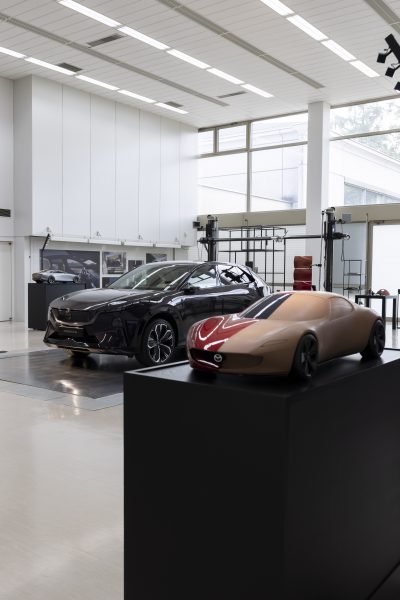
The Mazda CX‑6e, Mazda’s all-new fully electric SUV and a tangible expression of many of the ideas being discussed was the starting point of the journey. Under changing light conditions, its surfaces revealed the interplay of reflection, proportion and movement that the team had been describing.
Its exterior design originated within Mazda’s European Design Studio in Oberursel and was developed in close collaboration with colleagues in Japan. The result is a new interpretation of Kodo for the electric era: sculptural surfaces, aerodynamic precision and a distinctly modern character.
Viewed within the studio environment rather than on a motor show stage, the CX‑6e felt less like a finished object and more like the result of an ongoing dialogue between designers, materials and craft. The sketches, clay models and material studies surrounding it revealed how countless decisions, conversations and refinements come together in a single form.
The Human Hand Behind the Machine
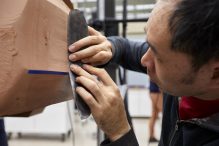
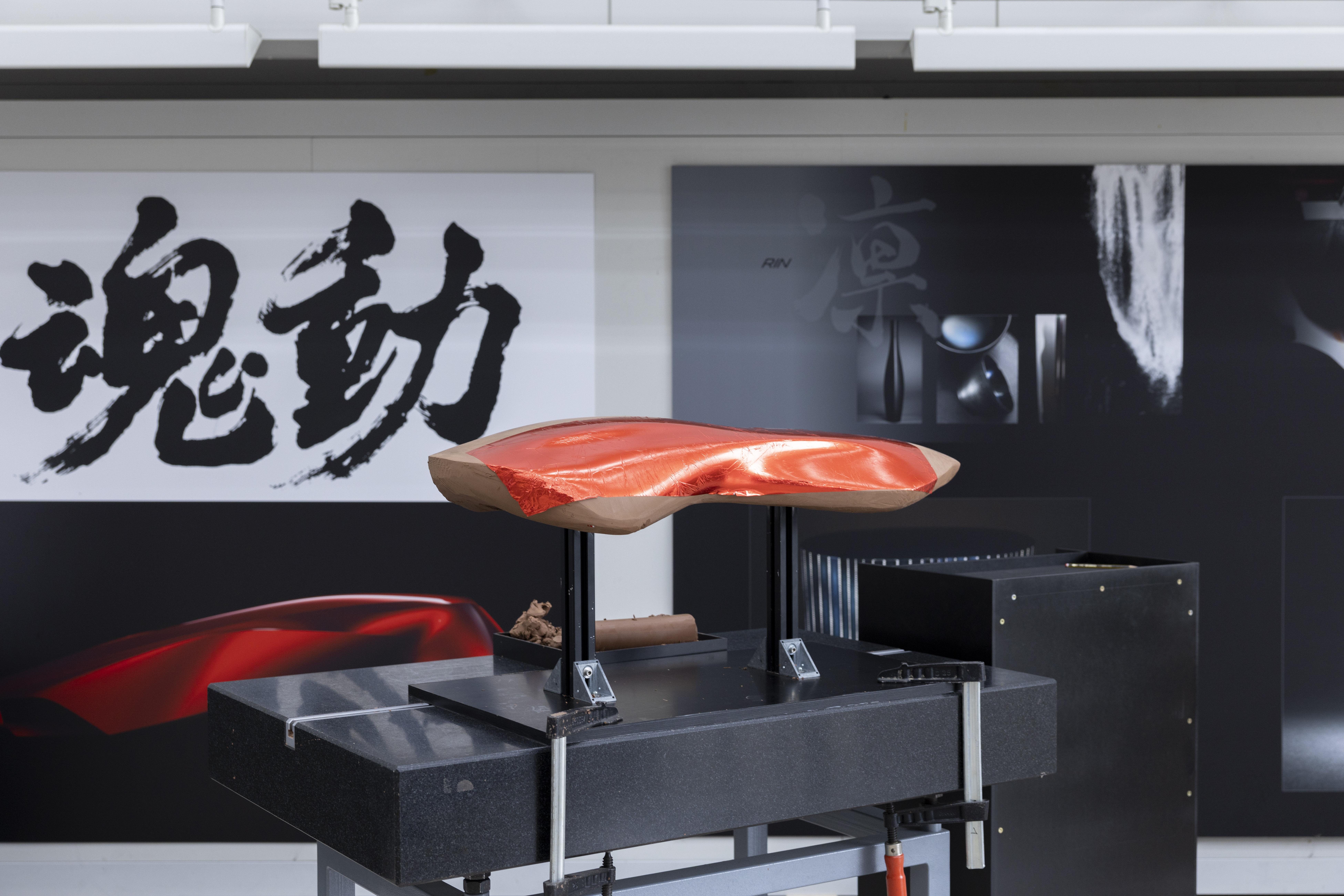
From the CX‑6e, the journey moved towards one of the parts of Mazda’s traditional design process: clay modelling. Surrounded by physical models in various stages of development, the role clay continues to play within a modern design studio became immediately apparent. Under the guidance of Mazda’s clay modelling team, the workshop revealed how small adjustments can fundamentally change the character of a surface.
Long before a vehicle reaches production, it exists as a full-scale physical form shaped and refined by hand. Digital tools remain essential, but clay allows designers to assess form under real light, at human scale and in real space.
As the clay modellers explained, the task is not simply to reproduce a sketch, but to translate an idea into physical reality while preserving its character and intent.
Looking back towards the CX‑6e in the studio, it became easier to understand how countless small refinements ultimately contribute to the character and presence of a finished vehicle.
Colour and Materials as Craft
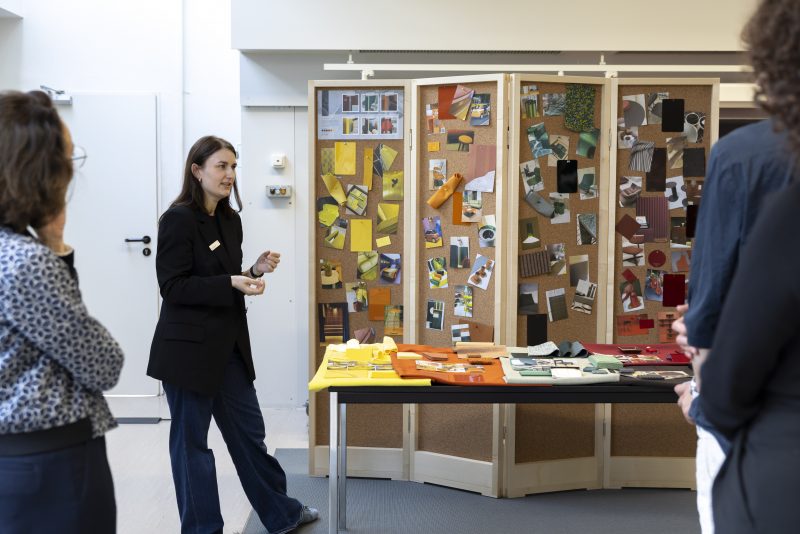
The same spirit of observation and refinement continues through Mazda’s Colour, Material & Finish (CMF) work, where colour and material become essential tools for shaping atmosphere, perception and emotional connection.
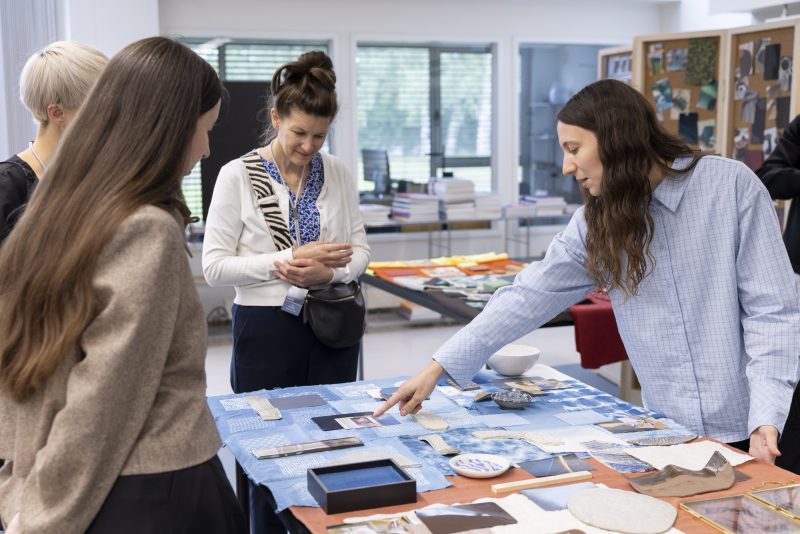
Research begins long before a colour appears on a vehicle. Image boards, material samples and references drawn from architecture, fashion, retail and material culture help designers understand how colours, textures and atmospheres evolve over time.
Discussions ranged from material sourcing and trend research to the role of light in shaping how surfaces and colours are perceived. The CX‑6e provided a tangible example of how these considerations come together—from the treatment of exterior surfaces to the atmosphere created inside the cabin.
Colour, material and form are therefore not treated as separate disciplines, but as parts of a larger design conversation—one that continues throughout development.
A Living Dialogue
The Mazda CX‑6e represented the outcome. Yet behind its surfaces lies a process shaped not by a single designer or department, but by continuous dialogue.
Within Mazda Research Europe (MRE) in Oberursel, designers, clay modellers, Colour, Material & Finish specialists, engineers and digital experts contribute different perspectives as ideas evolve. Sketches become models. Materials are tested and reassessed. Surfaces are reviewed under changing light. Concepts are repeatedly challenged and refined in pursuit of forms that feel balanced, coherent and emotionally engaging.
This exchange extends beyond Oberursel. The relationship between Mazda Research Europe and Hiroshima is a continuous dialogue, where European insights help shape global programmes, while global concepts are refined and validated against European expectations before reaching customers.
In a period defined by digital acceleration, the experience served as a reminder that design still depends on curiosity, observation and refinement. Technology enables the process. People shape the outcome.
As Jo Stenuit explains: “Technology is essential, of course, but it does not replace sensitivity. Some decisions still depend on the human eye, the human hand and the ability to recognise when something feels resolved.”
Through Mazda Craft Journeys x WDC, the studio became part of a broader design dialogue. The focus shifted from the finished object to the people, processes and exchanges through which ideas take shape.
And perhaps that is what design and craftsmanship continue to share: both move forward through experience, observation and a willingness to keep refining. Not as finished statements, but as practices shaped by people over time.
END